
The Complete Step-by-Step Guide to Buying Land in Kenya Safely
Buying land in Kenya is one of the most rewarding financial decisions you can make — and one of the easiest to get catastrophically wrong. This is the complete process, step by step, written for first-time buyers, diaspora investors, and anyone who wants to own land without losing their savings to a process they didn't fully understand.
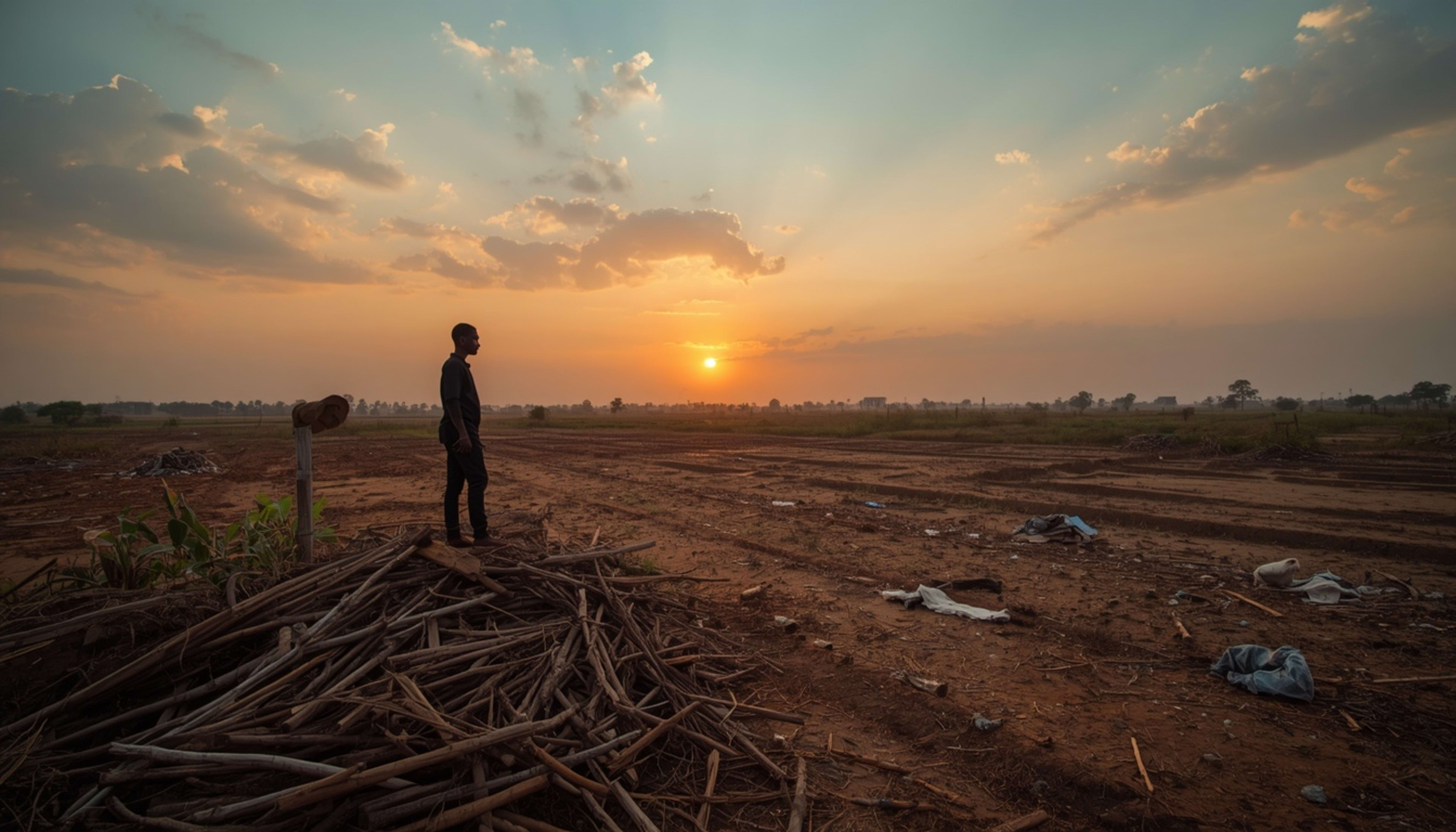
Land ownership in Kenya is not complicated. But it is unforgiving. The process has clear steps, clear rules, and clear consequences for skipping any of them — and the consequences tend to arrive after you have already paid, already signed, and already told everyone you know that you bought land.
This guide exists because most buyers learn this process by experiencing it, and experiencing it wrong is expensive. Whether you are buying a quarter-acre in Kitengela, a plot in Nanyuki, or a subdivision unit in a managed estate outside Nairobi, the steps below apply. Follow them in order. Do not skip any of them because the seller seems trustworthy, the price seems right, or the deadline seems real.
There are no shortcuts in land acquisition that do not cost you more than the shortcut saved.
In this list
- 1Define exactly what you are buying before you start looking
- 2Find the land — and verify the listing before you visit
- 3Visit the land — with your own eyes and your own questions
- 4Get the title number and run an official search yourself
- 5Instruct your own independent advocate
- 6Commission a physical survey before signing anything
- 7Negotiate and sign the sale agreement — with everything in writing
- 8Pay — in the right way, in the right sequence
- 9Complete the transfer and register the title in your name
- 10After transfer: pay your land rates and secure the title
- 11The process is not complicated
Define exactly what you are buying before you start looking
Before you view a single listing, you need three things settled in your own head — because without them, you will make decisions based on emotion rather than criteria, and sellers and agents will exploit that gap.
Your true budget: Not what you have saved. What you can spend on the land itself after reserving for acquisition costs. As a fixed rule: budget 12–15% of the land price on top for stamp duty, legal fees, survey fees, and registration. On a KES 3M plot, you need KES 3.36M to KES 3.45M total. If you only have KES 3M, your land budget is KES 2.6M — not KES 3M.
Your intended use: Residential, agricultural, commercial, or investment hold? This determines which zoning classifications are acceptable, which counties make sense, and what infrastructure you actually need nearby. A plot you intend to build on immediately has different requirements from one you are holding for five years.
Your timeline: Are you buying to build within 12 months or holding as an investment? This affects how much weight you give to current infrastructure versus projected development, and how much liquidity risk you can absorb if the market moves.
A buyer who knows exactly what they want is significantly harder to defraud and significantly harder to pressure into a bad decision than one who is still figuring it out during the transaction.
Find the land — and verify the listing before you visit
When you find a listing that meets your criteria, do not call the agent first. Do the listing verification first.
Reverse image search the photos. Right-click each photo and search on Google Images. Fraudulent listings routinely use stolen photos from legitimate listings, sometimes from other countries entirely. If the photos appear elsewhere under a different property or location, stop immediately.
Check the price against comparable listings. Search Qimani and other platforms for similar plots in the same area. If the listing price is more than 15–20% below comparable properties with no obvious explanation, treat it as a signal requiring more scrutiny — not less.
Verify the agent or seller independently. Estate agents should be registered with the Estate Agents Registration Board. Ask for their registration number and confirm it. If a private seller, confirm their identity through eCitizen's IPRS before arranging any meeting.
Only after these checks should you make contact and arrange a viewing. The excitement of finding a promising listing is exactly when your scrutiny should increase, not relax.
Visit the land — with your own eyes and your own questions
Meet the seller or agent at a public place first — a petrol station, a shopping centre, anywhere busy and open. Do not go directly to a remote plot with someone whose identity you have not yet verified.
At the site, do not let the seller walk the boundaries for you. Walk them yourself. Note the positions of the boundary beacons — concrete pegs, usually marked with survey nails. Photograph each beacon and its surroundings. Note any discrepancies between what you are walking and what the seller's sketch or brochure shows.
Ask directly:
- Is this land freehold or leasehold — and if leasehold, how many years remain on the lease?
- Is there a caretaker, tenant, or anyone currently occupying or using this land?
- Are there any disputes with neighbouring landowners?
- Has the land ever been subdivided from a larger parcel?
- What is the current zoning classification from the county?
A seller with nothing to hide answers these questions directly. Note which ones produce hesitation, deflection, or a change of subject. Inspect thoroughly. Confirm the land matches what you were shown in the listing before you take any further steps — and certainly before any money changes hands.
Get the title number and run an official search yourself
After the site visit, if you are still interested, ask the seller for the full title number — in the exact format it appears on the title deed. Not the plot number. Not the estate reference. The Land Reference number or title number as registered.
Then conduct the title search yourself. Two options:
Online: Go to ardhisasa.lands.go.ke, create an account using your national ID, and run a search on the title number. For Nairobi titles, this returns the registered owner, encumbrances, cautions, and charges in under ten minutes. Cost: KES 500.
In person: Visit the relevant county Lands Registry — Ardhi House on Ngong Road for Nairobi — with the title number, submit a search request form, pay the fee, and collect the result. For counties not yet on Ardhisasa, this is the only option.
Confirm three things from the search result: the registered owner's name exactly matches the seller's ID, there are no cautions or caveats on the title, and there are no charges — meaning the land is not mortgaged to a bank or lender whose interest survives the sale.
Never accept a search result handed to you by the seller. The only search result that means anything is the one you obtained with your own hands from the Lands Registry.
Instruct your own independent advocate
At this point — after the site visit and the title search — if everything looks clean, you instruct an advocate. Your advocate. Not the seller's recommended advocate, not the developer's in-house legal team, not the agent's preferred firm. An advocate you found independently and verified on the Law Society of Kenya register at lsk.or.ke.
Your advocate will conduct full legal due diligence: a deeper title search, verification of the seller's capacity to sell (are they the registered owner? If not, do they have a valid power of attorney?), confirmation of the land's zoning classification with the county, a check for any pending rates or land rent arrears owed to the government, and a review of the boundaries against the Registry of Survey records.
Advocate fees for a straightforward land transaction typically run KES 30,000–80,000 depending on the value and complexity. This is not a cost to minimise. An advocate who charges KES 10,000 for a KES 5M land transaction is either cutting corners on the due diligence or is connected to the other side of the transaction in ways that are not in your interest.
The advocate's job is to find problems before you pay. Let them find problems. Do not rush them. If your advocate raises a concern, that concern deserves to be resolved — not explained away by the seller.
Commission a physical survey before signing anything
This is the step most buyers skip. It is also the step that catches the fraud the title search cannot catch.
A title search confirms who owns what the title describes. It cannot confirm that what the title describes is what you were shown on the ground. The boundary switch — where a seller walks you around a desirable plot while holding a title for a different, inferior one nearby — is one of the most common land fraud techniques in Kenya precisely because it survives a title search.
A registered surveyor pegs the actual boundaries of the title on the ground — using the coordinates from the Registry of Survey — and confirms whether they match what you walked with the seller. They will also confirm the actual size of the land against what the title states, identify any encroachments from neighbouring plots, and flag any issues with the beacon condition or placement.
Survey costs for a standard residential plot: KES 15,000–40,000 depending on size and location. For agricultural land or larger parcels, more.
This is not optional for land purchases. Apartments have strata titles that make boundary fraud structurally harder. Raw land does not. Pay for the survey. It is the cheapest insurance you will ever buy against a KES 3 million mistake.
Negotiate and sign the sale agreement — with everything in writing
Once due diligence and survey are complete and clean, your advocate drafts or reviews the sale agreement. Several things must be explicit in this document — not implied, not verbally agreed, explicitly written:
- The full purchase price and the payment schedule — deposit amount, balance, and the exact date by which the balance is due
- The title number being transferred — the same one your search confirmed
- Vacant possession date — when the seller will clear any occupants, equipment, or structures not included in the sale
- Who pays what costs — stamp duty is the buyer's responsibility by law, but other costs (land rent clearance, rates arrears) should be allocated explicitly
- Consequences of default — what happens if the seller fails to transfer, or if you fail to pay on the agreed date
- Condition of title at transfer — the seller warrants that the title will be free of encumbrances at the point of transfer
Do not sign an agreement that uses vague language on any of these points. Vague language in a sale agreement is a problem that costs ten times more to resolve after signing than before. Your advocate's job at this stage is to be difficult. Let them be difficult. That is what you are paying for.
Pay — in the right way, in the right sequence
Payment in a Kenyan land transaction follows a specific sequence that protects you. Do not deviate from it regardless of what the seller requests.
Deposit: Typically 10–30% of the purchase price, paid on signing of the sale agreement. This should be paid to your advocate's client account — not directly to the seller — and held there until the conditions for release are met. Never pay a deposit before the sale agreement is signed and your advocate has confirmed the title is clean.
Balance: Paid on or before the completion date agreed in the sale agreement, simultaneously with — or immediately before — the transfer documents being executed. The full balance should never be paid until your advocate confirms the transfer documents are in order and ready for registration.
Method: Bank transfer with a clear reference, or RTGS for larger amounts. MPESA for land transactions is not advisable above KES 150,000 — the transaction limits, the difficulty of recovery, and the weaker paper trail make it a risk not worth taking. Keep every receipt, every bank confirmation, every MPESA message. These are your evidence.
Pay only what was agreed, to the account your advocate has verified, at the stage the agreement specifies. Any request to pay outside this sequence — earlier than agreed, to a different account, in cash — is a request you should refuse and report to your advocate immediately.
Complete the transfer and register the title in your name
Payment alone does not make you the legal owner of land in Kenya. Registration does. Until the title is registered in your name at the Lands Registry, the seller remains the legal owner — regardless of what you have paid, what you have signed, or what you have been told.
Your advocate handles the transfer process:
- Transfer forms are executed by both seller and buyer and witnessed by your advocates
- Stamp duty is assessed and paid to KRA — your advocate will obtain the valuation and process payment through iTax
- Consent to transfer is obtained from the National Land Commission if the land is on government leasehold — this can take 4–12 weeks and should be initiated early
- The transfer documents are lodged at the Lands Registry for registration
- The new title deed is collected once registration is confirmed — your advocate will notify you
The full transfer and registration process in Kenya typically takes 60–120 days from payment to title in hand, depending on the county, the workload at the Registry, and whether NLC consent is required. Nairobi generally moves faster since the Ardhisasa digitisation. Some counties are slower.
You are not done until that title is in your hands, in your name, with the correct LR number, and you have personally confirmed it against the Registry records. That is the finish line. Everything before it is process.
After transfer: pay your land rates and secure the title
You own the land. Here is what happens in the first 90 days that most new owners neglect — and that creates problems years later.
Pay outstanding land rates and land rent. Your advocate should have confirmed these are clear at the point of transfer — but confirm independently with the county government that rates are up to date and continue paying annually. Unpaid rates accumulate as a charge on the land and can complicate a future sale.
Store the title deed securely. The original title deed should be kept in a fireproof safe, a bank safe deposit box, or with your advocate. A lost title deed is recoverable through the Lands Registry but the process is lengthy, expensive, and occasionally contested. Do not keep it in a drawer at home.
Place a caution if you are not building immediately. If the land will sit undeveloped for a year or more, consider placing a caution on the title at the Lands Registry. This prevents any transactions being registered against your land without your knowledge — a protection against the increasingly common fraud where a title is transacted without the legitimate owner's involvement.
Photograph and document the boundaries. GPS-stamp photos of each boundary beacon. If beacons are disturbed or removed by neighbours in the coming years, your documentation establishes the original positions.
Owning land in Kenya is a long game. The buyers who protect their investment after purchase as carefully as they verified it before are the ones who never have a problem. The title in your hands is the beginning of stewardship, not the end of a transaction.
The process is not complicated
The process is not complicated. The discipline is.
Every step above is straightforward in isolation. The difficulty is doing all of them, in order, without being rushed, pressured, or charmed into skipping one. Sellers create urgency. Agents create competition. Deadlines appear from nowhere. The land is beautiful and the price is right and someone else is apparently viewing tomorrow.
None of that changes the process. A title search still takes the time it takes. A survey still needs to be done. An advocate still needs to read the agreement. These steps exist because land transactions in Kenya have produced enough loss, enough fraud, and enough litigation to make the process necessary — and the buyers who skip steps because the deal felt safe are the ones filling those courts.
Do the steps. All of them. In order.
The land will still be there after your due diligence is complete. If it won't wait — it was never the right land.
Search verified land listings across Kenya on Qimani →